Beginner Fitness Guide: Walking, Home Workouts and Building a Routine
Starting to exercise as an adult can feel like everyone else got a manual you never received. The good news is that the basics are simpler than the fitness industry makes them look. This guide walks through the three things most beginners need first: a form of movement you can do today (walking), a way to get stronger without a gym (home workouts), and a realistic plan for keeping it going once the novelty wears off (a routine). Read it start to finish, or jump to the section you need and follow the links to the more detailed guides.
What “enough” exercise actually looks like
Public health guidelines in the United States and Europe agree on the same broad target for adults. The US Centers for Disease Control and Prevention (CDC) and the UK National Health Service (NHS) both recommend at least 150 minutes of moderate-intensity aerobic activity a week (or 75 minutes of vigorous activity, or a mix), plus muscle-strengthening activity that works all the major muscle groups on at least two days a week (CDC, NHS).
Two details in those guidelines matter more for beginners than the headline numbers. First, the CDC notes that you can “spread your activity out during the week and break it up into smaller chunks of time,” so three ten-minute walks count just as much as one thirty-minute walk. Second, the same guidance says that “some physical activity is better than none,” and that adults who sit less and do any amount of moderate activity gain some health benefit. In other words, 150 minutes is a destination, not an entry requirement. If you are currently doing nothing, twenty minutes of walking this week is a real improvement.
“Moderate intensity” has a plain-English test. The CDC describes it as being able to talk but not sing during the activity. If you cannot say more than a few words without pausing for breath, you have moved into vigorous territory (CDC: Measuring physical activity intensity). For most beginners, a brisk walk lands in the moderate range.
Why bother? The benefits that show up early
It is easy to think of exercise as a long-term investment that pays off decades from now. Some of the benefits are like that, but the CDC also lists benefits that appear almost immediately: a single session of moderate-to-vigorous activity can reduce short-term feelings of anxiety and help you sleep better. Over the longer term, regular activity is associated with a lower risk of heart disease, type 2 diabetes and several cancers, stronger bones and muscles, and a better ability to do everyday tasks (CDC: Benefits of physical activity).
The World Health Organization estimates that around 31% of adults worldwide do not meet recommended activity levels, and it flags long stretches of sitting as a risk in its own right, separate from how much you exercise (WHO fact sheet). If you sit for most of the day, breaking that up with short walks is one of the easiest wins available.
Part 1: Walking, the beginner’s best first step
Walking is where we suggest almost everyone starts, for practical reasons rather than sentimental ones. It needs no equipment beyond comfortable shoes, it carries a low risk of injury, it fits into a day you already have, and a brisk pace counts fully toward the 150-minute target. The NHS notes that a brisk walk is roughly three miles an hour, “faster than a stroll,” and that even ten minutes of brisk walking a day counts toward your weekly total (NHS: Walking for health).
How to begin
- Start with time, not distance. Pick a length you are confident you can manage on a busy day: ten or fifteen minutes is plenty. Aim to repeat it on most days before you make it longer.
- Add gradually. The NHS advises increasing walking distance gradually if you are not used to activity. A common rule of thumb is to add a few minutes per walk each week rather than doubling overnight.
- Use the talk test. Walk fast enough that your breathing picks up and conversation takes a little effort, but you could still hold one.
- Attach it to something you already do. Walking part of a commute, walking to the shop instead of driving, or taking a lap around the block after lunch removes the need to “find time.”
About step counts
You do not need 10,000 steps a day to benefit. A 2022 analysis in The Lancet Public Health pooled 15 studies covering roughly 50,000 adults and found that the risk of early death kept falling until about 6,000 to 8,000 steps a day for adults 60 and over, and about 8,000 to 10,000 steps a day for younger adults, with the biggest gains coming from moving out of the lowest-activity group (UNC summary; Paluch et al., 2022). If you currently average 3,000 steps, getting to 5,000 is a meaningful change. Treat your tracker as a way to notice trends, not as a daily pass/fail.
For a step-by-step plan, see How to Start Walking for Exercise When You’re a Beginner. If you already walk but find it dull, How to Make Everyday Walks More Enjoyable covers routes, company, and small rituals that help. And because comfortable feet make or break the habit, our guide to what to look for in walking shoes explains fit without the marketing.
Part 2: Home workouts, or how to get stronger in your living room
Walking covers the aerobic half of the guidelines. The other half, muscle-strengthening activity on at least two days a week, is the part beginners most often skip, usually because it sounds like it requires a gym. It does not. The CDC counts body-weight exercises such as push-ups and sit-ups, resistance bands, and even heavy gardening as muscle-strengthening activity, as long as the effort is enough that “it’s hard to do another repetition without help” by the end of a set (CDC: What counts).
The minimum useful home routine
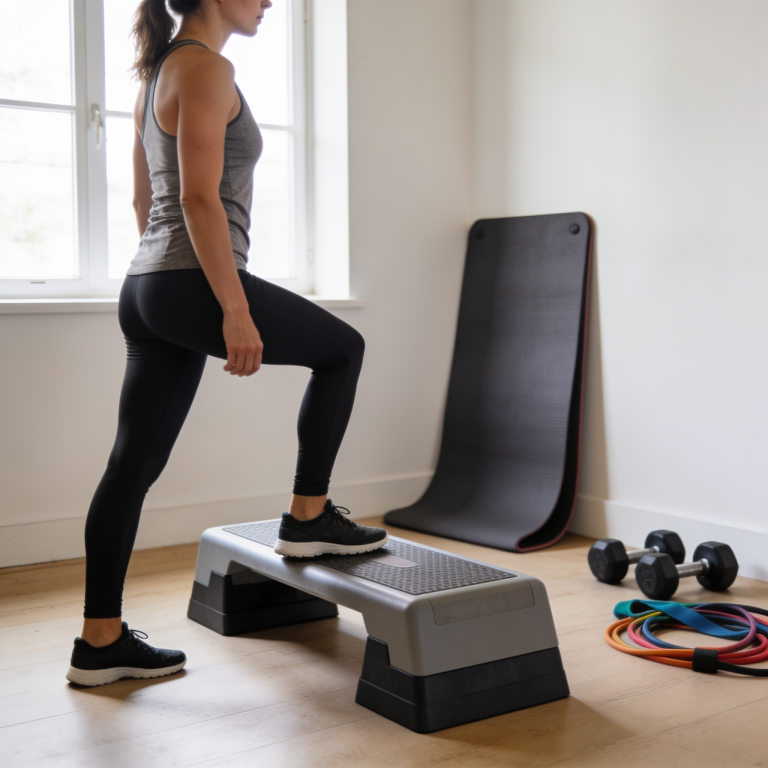
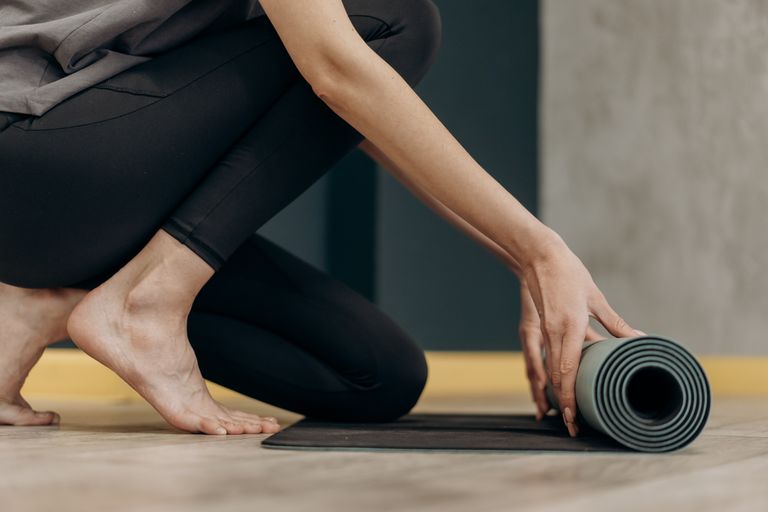
You need a clear patch of floor about the size of a yoga mat, a sturdy chair, and optionally a set of resistance bands. A beginner session can be as short as ten to fifteen minutes and might look like this:
- Warm up (2–3 minutes): march in place, arm circles, a few slow squats to a chair.
- Legs and hips: sit-to-stand from a chair, 8–12 repetitions.
- Chest and arms: wall push-ups or incline push-ups against a counter, 8–12 repetitions.
- Back and shoulders: band pull-aparts or bent-over band rows, 8–12 repetitions.
- Core: a short plank hold or dead-bug movement, working up to 20–30 seconds.
- Cool down (2 minutes): gentle stretching for the muscles you used.
The CDC suggests aiming for 8 to 12 repetitions per exercise, counting that as one set, and doing at least one set, with two or three sets giving more benefit. Start with one set, and add a second when the first stops feeling demanding. Choose an easier version of any movement you cannot do with control; a push-up against a wall is still a push-up.
Our Home Workout Basics guide covers space, flooring, the small amount of equipment worth considering, and how to structure a first month. If bands interest you, the Beginner’s Guide to Resistance Bands explains the different types and what to look for before you buy anything.
A word on soreness and safety
Mild muscle soreness a day or two after a new strength session is normal and fades as your body adapts. Sharp pain during a movement, pain in a joint rather than a muscle, dizziness, or chest discomfort are not normal; stop and get advice. The NHS recommends speaking to your GP first if you have not exercised for some time or have a health condition, and the CDC gives similar guidance for people with chronic conditions. This site provides general education, not individual medical advice.
Part 3: Building a routine that outlasts your motivation
Most people do not fail at exercise because they chose the wrong workout. They fail because the plan depended on feeling motivated, and motivation is unreliable. A routine is what carries you through the weeks when you are tired, busy, or simply not in the mood.
Start smaller than feels impressive
A ten-minute walk you actually take beats a forty-five-minute programme you abandon in week two. Set a “floor” version of each habit that you can do on your worst day: a walk around the block, one set of the home routine. On good days you will often do more, but the floor keeps the streak alive.
Anchor it to something fixed
Decide in advance when and where the activity happens, and tie it to an existing cue: after the morning coffee, straight after the school run, the first thing you do when you get home from work. The CDC’s advice for people short on time is to look at a typical week, identify a few 30-minute windows, and choose activities you can do in whatever time you actually have (CDC: Overcoming barriers).
Expect it to take a while to feel automatic
A frequently cited 2010 study from University College London followed 96 volunteers who each chose a new daily behaviour, including exercise, and found that on average it took about 66 days for the behaviour to feel automatic, with individual results ranging from 18 to 254 days, and exercise habits tending to take longer than simpler ones. Encouragingly, missing a single day did not meaningfully set people back (Lally et al., 2010). The practical lesson: plan for two or three months of deliberate effort, and treat a missed day as a missed day, not as the end of the plan.
Measure things other than weight
If the only number you watch is the bathroom scale, you will miss most of what is changing. Resting heart rate, how far you can walk in twenty minutes, how many sit-to-stands you can do, how you sleep, and how you feel climbing stairs all move earlier and more reliably than body weight. How to Track Fitness Progress Beyond the Scale gives simple ways to record them.
For the full approach, including what to do when work, travel or illness interrupts you, read How to Build an Exercise Habit Around a Busy Schedule.
A simple first month, put together
Here is one way to combine the three parts. Adjust the numbers down if they feel like too much; the point is consistency, not heroics.
- Week 1: Walk 10–15 minutes on five days. Do the home routine (one set each) on two days.
- Week 2: Walk 15–20 minutes on five days. Home routine on two days, still one set.
- Week 3: Walk 20–25 minutes on five days, with a few minutes at a brisker pace. Home routine on two days, adding a second set of any exercise that felt easy.
- Week 4: Walk 25–30 minutes on five days. Home routine on two or three days, two sets. Note your resting heart rate and how a fixed walking route feels compared with week 1.
By the end of week 4 you would be at roughly 125–150 minutes of walking plus two strength days, which is the guideline target, reached in a way that never asked for more than half an hour at a time.
Common beginner questions
Do I need to join a gym?
No. Everything in this guide can be done with walking and a small amount of space at home. Gyms are useful for some people because of the equipment and the routine of going somewhere, but they are not required to meet the guidelines.
What if I am much older, or have a health condition?
The CDC’s guidance for adults 65 and over adds balance activities to the weekly mix and says plainly that if you cannot meet the recommendations, you should “be as physically active as your abilities and conditions allow” (CDC: Older adults). Anyone with a diagnosed condition, or who has been inactive for a long time, should check with a healthcare professional about what is appropriate before increasing activity.
Will walking help me lose weight?
Physical activity supports weight management, particularly when combined with changes to eating, but results vary widely between people, and we do not promise any specific outcome. The health benefits of walking, from better sleep to a lower risk of several long-term conditions, do not depend on the scale moving.
Where to go next
Pick the guide that matches your next step:
- Never exercised, or not for years: How to Start Walking for Exercise When You’re a Beginner
- Already walk, want to enjoy it more: How to Make Everyday Walks More Enjoyable
- Want to add strength at home: Home Workout Basics and the Beginner’s Guide to Resistance Bands
- Keep starting and stopping: How to Build an Exercise Habit Around a Busy Schedule
- Not sure if anything is working: How to Track Fitness Progress Beyond the Scale
- Feet hurt when you walk: What to Look for in Walking Shoes
Sources
- CDC, Adult Activity: An Overview
- CDC, What Counts as Physical Activity for Adults
- CDC, Measuring Physical Activity Intensity
- CDC, Benefits of Physical Activity
- CDC, Overcoming Barriers to Physical Activity
- CDC, Older Adult Activity: An Overview
- NHS, Physical activity guidelines for adults aged 19 to 64
- NHS, Walking for health
- World Health Organization, Physical activity fact sheet
- Paluch AE et al., Daily steps and all-cause mortality: a meta-analysis of 15 international cohorts, The Lancet Public Health, 2022
- Lally P et al., How are habits formed: Modelling habit formation in the real world, European Journal of Social Psychology, 2010
Content on Fitness With Fun is for general educational purposes and is not a substitute for personalized advice from a qualified healthcare professional.

One Comment
Comments are closed.