How to Track Fitness Progress Beyond the Scale
Three weeks into a new routine, many beginners step on the scale, see the same number, and conclude that nothing is happening. Usually a great deal is happening; it is just not showing up in the one place they are looking. Body weight is a noisy, slow, and often misleading measure of whether exercise is working. This guide covers measures that respond sooner and tell you more, and how to record them without turning your life into a spreadsheet.
Why the scale is a poor progress meter for beginners
Weight moves for many reasons that have nothing to do with fitness: water, salt, the time of day, where you are in a menstrual cycle, what you ate last night. Meanwhile, the things that exercise changes first, such as how your heart responds to effort, how strong your legs are, and how well you sleep, are invisible to it. The CDC lists a long set of benefits from regular activity, and most of them, from reduced short-term anxiety and better sleep to stronger bones and muscles and a lower risk of long-term disease, do not require weight to change at all (CDC: Benefits of physical activity). If you only track weight, you are grading yourself on the one measure that is least sensitive to what you are doing.
That does not mean weight never matters. It means it should be one line in your notes, weighed at most weekly under the same conditions, rather than the headline.
Measure 1: Did you do it?
The most useful metric for a beginner is the simplest: sessions completed. Consistency is what produces every other result, and it is entirely within your control, unlike the scale. A calendar with a tick for each walk or strength session, or a note of weekly minutes, tells you whether the plan is working as a plan. If the ticks are there and you feel no different after two months, adjust the plan. If the ticks are missing, no other measure matters yet; see How to Build an Exercise Habit Around a Busy Schedule.
Measure 2: How hard does the same thing feel?
The CDC describes intensity two ways: absolute (how much energy an activity uses) and relative (how hard it feels to you), and suggests a simple 0-to-10 scale for the latter, where sitting is 0, moderate effort sits around 5 or 6, and vigorous around 7 or 8 (CDC: Measuring intensity). Relative intensity is a progress tool in disguise. Pick a fixed route or a fixed session and rate how hard it felt out of 10. The walk that was a 7 in week one and a 4 in week six has not changed; you have.
The talk test is the same idea without numbers. If a hill that used to leave you unable to speak now lets you hold a conversation, you are fitter.
Measure 3: A repeatable walking test
Choose a route you can walk exactly the same way every time, ideally an out-and-back or a loop of ten to twenty minutes. Once every two to four weeks, walk it at a steady, brisk effort and note the time, or walk it for a fixed time and note how far you got. Over a few months the time comes down or the distance goes up. Keep everything else the same: same shoes, similar weather, similar time of day. This is far more informative than daily step totals, which vary with what your day happened to involve.
Measure 4: Resting heart rate
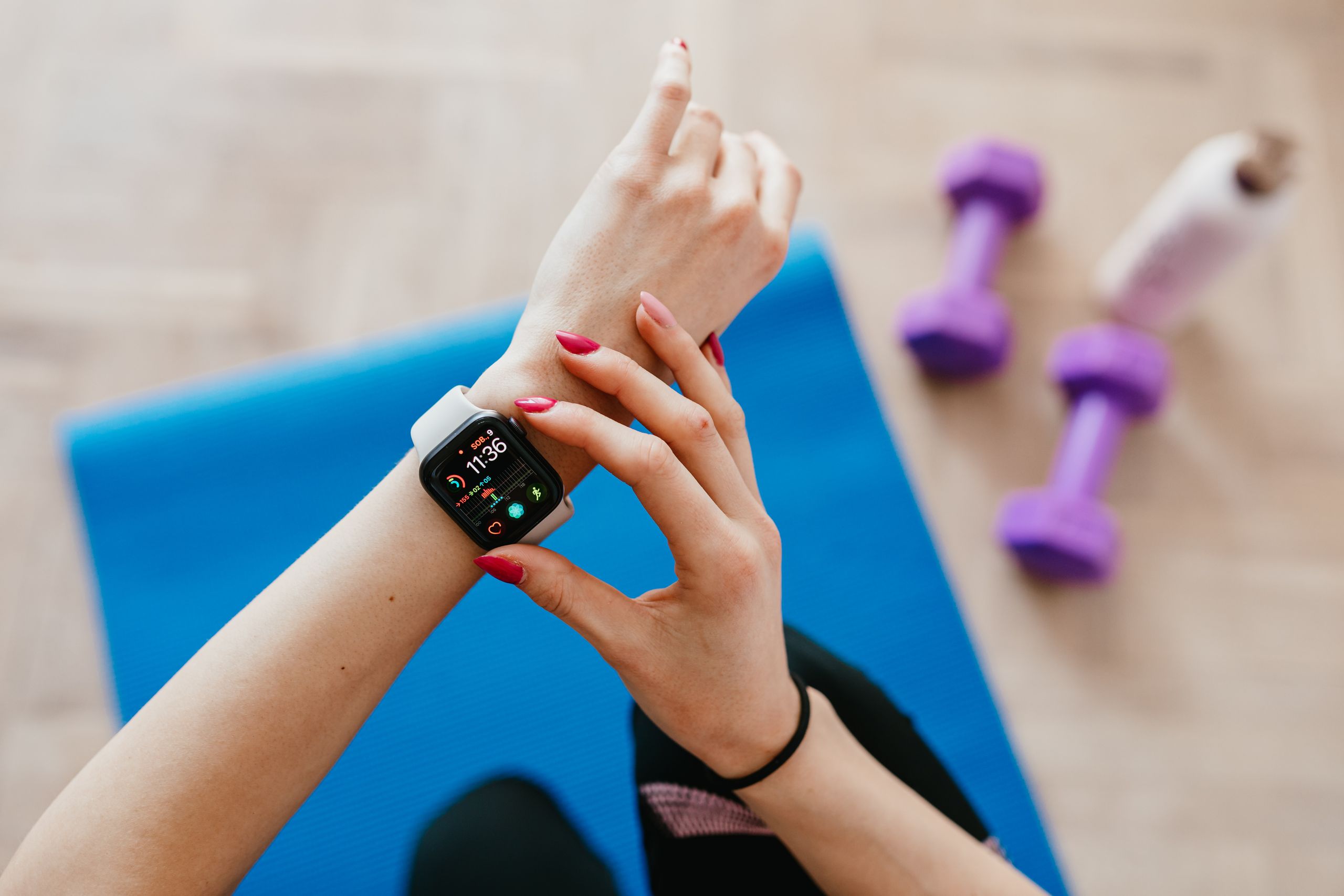
As aerobic fitness improves, resting heart rate often drifts lower, because the heart pumps more blood per beat and needs fewer beats at rest. You do not need a wearable: sit quietly for a few minutes first thing in the morning, find your pulse at the wrist or neck, and count beats for 30 seconds, then double it. Do this a few mornings a week and look at the monthly average rather than any single reading, since sleep, caffeine, illness and stress all push it around. A downward trend over a couple of months is a good sign. Note that resting heart rate varies widely between healthy people, so compare yourself only with yourself, and talk to a healthcare professional if you notice readings that concern you.
Measure 5: Simple strength tests
For the strength side of the guidelines, pick two or three movements from your home routine and count. Useful ones:
- Sit-to-stands in 30 seconds from a standard chair, arms crossed. Legs and hips.
- Push-ups in a row at whichever level you use (wall, counter, knees, floor), with good form. Chest, shoulders, arms.
- Plank hold in seconds, stopping when form breaks. Core.
- Step-ups in a minute on a stair, alternating legs. Legs and balance.
Test every four weeks, not every session. Progress in strength also shows up as moving to a harder version of an exercise: from wall push-ups to counter push-ups, from a lighter band to a heavier one. Note those changes too; they are progress even if the rep count resets.
Measure 6: Everyday life
Some of the most meaningful changes never get a number. Stairs without stopping. Carrying all the shopping in one trip. Getting up from the floor without using your hands. Sleeping through the night. Less of the afternoon slump. The CDC notes that regular activity improves the ability to do everyday activities and can improve sleep and reduce feelings of anxiety (CDC). Write these down when you notice them. On the days the scale is being unhelpful, this list is the antidote.
Measure 7: Body measurements, if you want them
If body composition is a goal for you, a tape measure around the waist, hips, chest and upper arm, taken monthly in the same spot, is more informative than weight, because muscle and fat can change in opposite directions while weight stays put. Photos taken monthly in the same light and clothing serve a similar purpose. Keep them private and infrequent; daily checking amplifies noise and does nothing for motivation.
How to keep the records
The best system is the one you will actually maintain. Options in rough order of effort:
- A wall calendar with a tick per session. Almost zero effort, surprisingly powerful.
- A notes app with one line per week: sessions, minutes, effort rating, and anything you noticed.
- A simple spreadsheet with a row per month for the walking test, resting heart rate average, and strength counts.
- A wearable or phone app, if you like them. Useful for steps and heart rate trends; less useful if the daily numbers start to feel like a verdict.
A note on step counts specifically: a 2022 analysis of around 50,000 adults found that the health benefit of extra daily steps levelled off around 6,000 to 8,000 for people 60 and over and around 8,000 to 10,000 for younger adults, and that the biggest gains came from moving out of the least active group (UNC summary of Paluch et al., 2022). Weekly averages moving upward are the thing to watch, not any single day.
What to expect, and when
Everyone adapts at a different rate, and we cannot promise any particular timeline or result. As a rough guide to where to look first: consistency and effort ratings change within the first couple of weeks; strength counts and the walking test usually shift within four to eight weeks; resting heart rate trends and everyday-life changes tend to become obvious over two to three months. If you have tracked consistently for three months and nothing at all has moved, that is useful information: the plan probably needs to be a little more demanding, and the Beginner Fitness Guide explains how to progress.
The takeaway
Track whether you showed up, how hard a fixed effort feels, a repeatable walking test, a few strength counts, and the everyday changes you notice. Weigh yourself weekly at most, and treat it as one line among many. Progress is almost always there; you just have to look somewhere the scale cannot see.
Sources
- CDC, Benefits of Physical Activity
- CDC, Measuring Physical Activity Intensity
- Paluch AE et al., Daily steps and all-cause mortality, The Lancet Public Health, 2022
Content on Fitness With Fun is for general educational purposes and is not a substitute for personalized advice from a qualified healthcare professional.