How to Start Walking for Exercise When You’re a Beginner

If you have not exercised in years, or ever, walking is the most forgiving place to start. It does not require a gym membership, special clothing, or a fitness level you do not yet have. What it does require is a plan that is small enough to survive a bad week. This guide gives you one, along with the few things worth knowing before you set off.
Why walking counts as real exercise
There is a lingering idea that walking is what you do instead of exercising. The public health guidelines disagree. Both the US CDC and the UK NHS list brisk walking as a standard example of moderate-intensity aerobic activity, the kind that counts toward the recommended 150 minutes a week for adults (CDC, NHS). The NHS puts it simply: a brisk walk can “help you build stamina, burn excess calories and make your heart healthier,” and even ten minutes a day counts (NHS: Walking for health).
The key word is brisk. A gentle stroll is still better than sitting, and the CDC is clear that “some physical activity is better than none,” but to get the fuller benefit you want a pace that noticeably raises your breathing.
How fast is “brisk”?
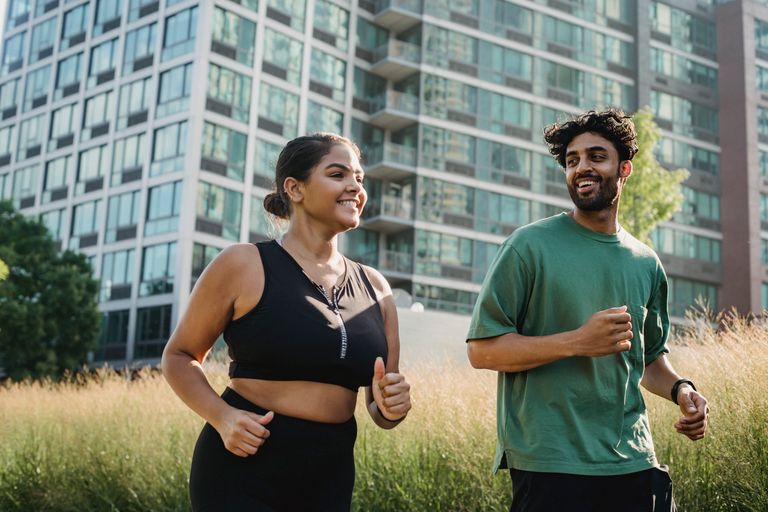
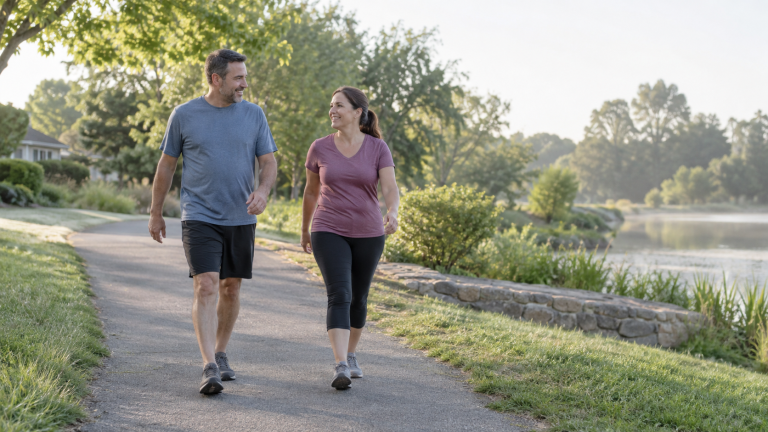
You do not need a speedometer. The NHS describes brisk walking as roughly three miles (about five kilometres) an hour, and gives the same test the CDC uses for moderate intensity: you can still talk, but you could not sing. If you can chat comfortably in full sentences without any change in your breathing, speed up a little. If you cannot get more than a few words out, you have crossed into vigorous effort, which is fine if you feel good but not necessary as a beginner.
Two practical ways to find that pace on your own:
- Walk as if you are slightly late. Not rushing, but purposeful. Arms swinging, shorter quicker steps rather than longer strides.
- Check your breathing at the five-minute mark. It should be noticeably deeper than at rest. If it is not, pick the pace up for the next stretch.
Before you start
Most healthy adults can begin walking without any special preparation. That said, the NHS advises speaking to your GP first if you have not exercised for some time, and the CDC recommends that people with chronic health conditions talk to a healthcare professional about what is appropriate. If you have chest pain, dizziness, or joint problems that make walking painful, get advice before increasing what you do. This article is general education, not personal medical advice.
You will also want shoes that fit well and feel comfortable over twenty or thirty minutes. Trainers you already own are usually fine to begin with; you do not need to buy anything on day one. If your feet, shins or knees start to complain as you walk more, our guide to what to look for in walking shoes explains fit in plain terms.
A four-week starter plan
This plan is deliberately modest. The most common beginner mistake is doing too much in week one, feeling sore or exhausted, and quietly stopping in week two. The NHS advice is to increase distance gradually; this schedule does exactly that.
Week 1: Make it happen
Walk for 10 minutes on five days. Any pace. The only goal is to prove to yourself that you can fit it in. Note the time of day that worked best.
Week 2: Add a little time
Walk for 15 minutes on five days. Try to keep a brisk pace for the middle five minutes, with easier walking at the start and end.
Week 3: Add a little pace
Walk for 20 minutes on five days. Aim for around ten minutes of that at a brisk pace. If you feel good, walk one of the days for 25 minutes.
Week 4: Reach the target
Walk for 25 to 30 minutes on five days, mostly brisk. Five days of 30 minutes gives you the full 150 minutes recommended for the week.
If any week feels like too big a jump, repeat it. There is no prize for finishing in four weeks, and nothing lost by taking six.
Where and when to walk
The best route is the one that is available. For most beginners that means straight out of the front door, because a walk that requires driving somewhere first is a walk that gets skipped. A few options that tend to work:
- The out-and-back: walk away from home for half your time, then turn round. Easy to measure and hard to cut short.
- The loop: a fixed circuit around your neighbourhood. Over the weeks, timing the same loop shows you getting fitter.
- The errand walk: the NHS suggests walking to the shops instead of driving, walking part of a commute, or walking children to school. These convert time you already spend into activity.
- The indoor fallback: a shopping centre, a large store, or laps of a corridor in bad weather. The CDC lists mall walking as a legitimate option when the weather is against you.
On timing, pick whatever slot you can protect. Morning walks are less likely to be cancelled by the day’s events; lunchtime walks break up sitting; evening walks can help you wind down. There is no universally best time.
What about step counts?
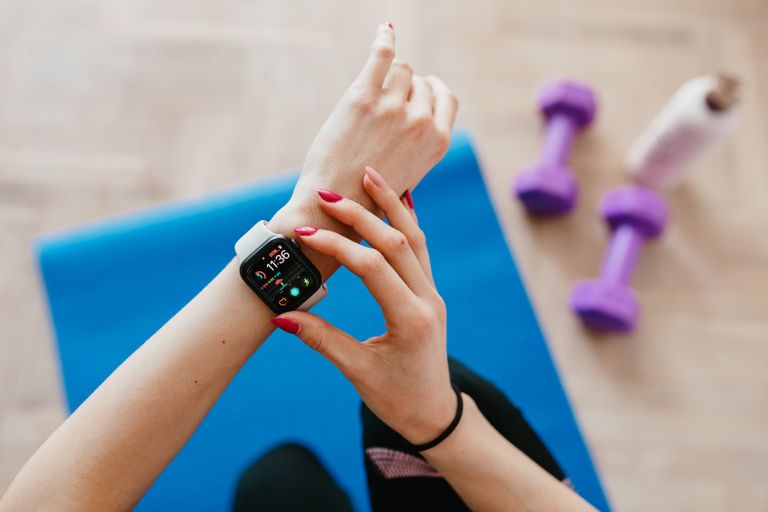
Step counters are useful for noticing whether you are moving more than you were, and less useful as a daily verdict on your worth. The oft-quoted 10,000-step target is a marketing figure rather than a scientific threshold. A 2022 analysis of 15 studies and around 50,000 adults found that the health benefit of extra steps levelled off around 6,000 to 8,000 a day for adults 60 and over, and around 8,000 to 10,000 for younger adults, and that the largest improvements came from people moving out of the least active group, who averaged about 3,500 steps (UNC Gillings summary; Paluch et al., 2022). If you use a tracker, aim to nudge your weekly average up, not to hit a round number every day.
Small things that make a big difference
- Warm up by walking slowly. The first few minutes at an easy pace are your warm-up. There is no need for a separate stretching routine before a walk.
- Stand tall. Look ahead rather than down, keep your shoulders relaxed, and let your arms swing naturally.
- Dress for ten minutes in. You will warm up quickly, so start slightly cool rather than wrapped up.
- Carry water on longer walks, particularly in warm weather.
- Have a plan B. Decide now what you will do when it rains, when you are tired, or when the day runs away from you. A five-minute walk on those days keeps the habit alive.
When walking starts to feel easy
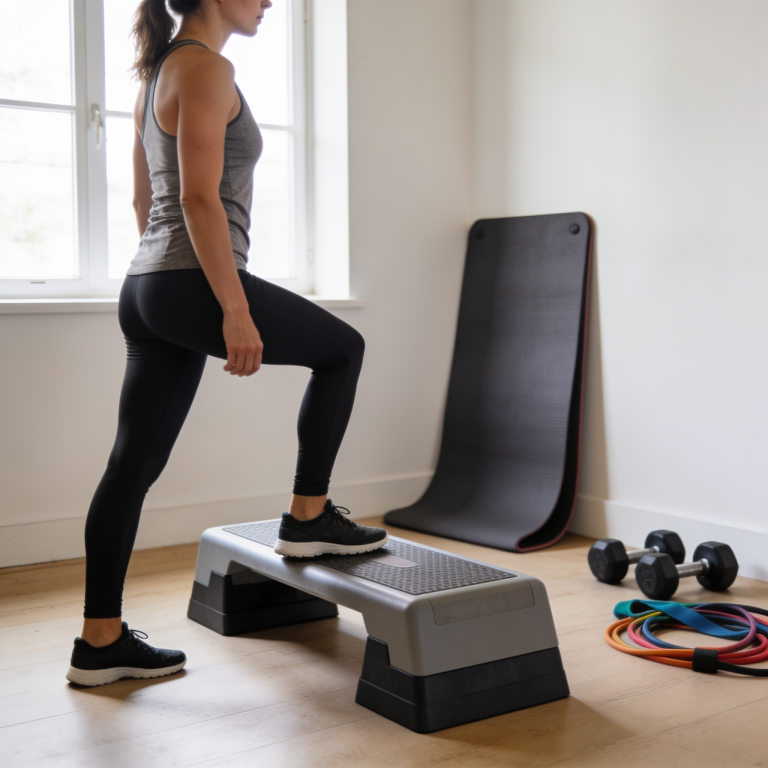
After a month or two, the walks that once left you breathing hard will feel comfortable. That is progress, and it is also a cue to change something. You can walk for longer, pick up the pace for short intervals, add hills or stairs, or, if you want to work toward the strength half of the guidelines, add two short home strength sessions a week. Our Home Workout Basics guide shows how to do that with almost no equipment. And if walking is already part of your week but has become a chore, How to Make Everyday Walks More Enjoyable has ideas for keeping it fresh.
The takeaway
Start with ten minutes, walk on most days, add time before you add speed, and use the talk test to find a brisk pace. Within a month you can be meeting the weekly guideline without ever setting foot in a gym. For the bigger picture, including how walking fits alongside strength work and habit-building, see our Beginner Fitness Guide.
Sources
- NHS, Walking for health
- NHS, Physical activity guidelines for adults aged 19 to 64
- CDC, What Counts as Physical Activity for Adults
- CDC, Measuring Physical Activity Intensity
- CDC, Overcoming Barriers to Physical Activity
- Paluch AE et al., Daily steps and all-cause mortality, The Lancet Public Health, 2022
Content on Fitness With Fun is for general educational purposes and is not a substitute for personalized advice from a qualified healthcare professional.