Bodyweight Training 101: A Beginner’s Guide to Building Strength at Home
What is Bodyweight Training?
Definition and Overview
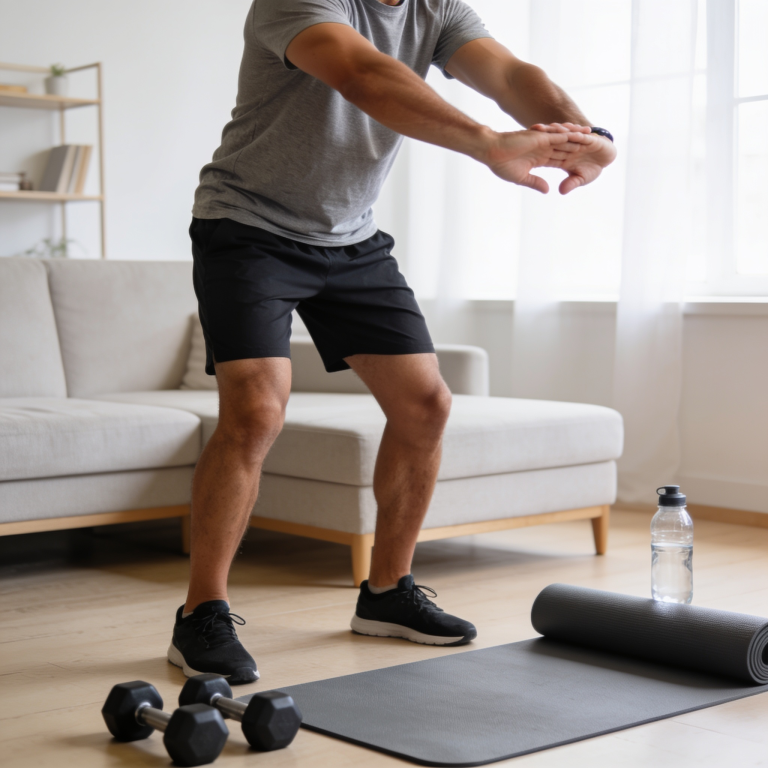
Bodyweight training refers to a form of exercise where individuals utilize their own body weight as resistance to improve strength, flexibility, and endurance. This method eliminates the need for external weights or gym machines, making it an incredibly accessible option for people at all fitness levels. Exercises such as push-ups, squats, and planks are all pivotal components of bodyweight training, aiming to engage multiple muscle groups effectively.
This training method focuses on mastering one’s own body before moving onto more advanced movements or additional weights, allowing for a tailored progression that is unique to each individual’s capabilities and goals. Because it can be performed virtually anywhere, bodyweight training embodies a minimalist philosophy that prioritizes function and sustainability in fitness.
History and Evolution
The roots of bodyweight training can be traced back to ancient civilizations, where warriors and athletes utilized their body weight to develop strength and agility. Early forms of physical training included techniques akin to modern calisthenics, which focused on using the body for resistance. Over the centuries, the practice evolved, seeing resurgence during various fitness movements, including those in the mid-20th century that popularized calisthenics in schools and military training programs.
In recent years, the rise of functional training and high-intensity interval training (HIIT) has further propelled bodyweight exercise into the mainstream, making it a favored choice among fitness enthusiasts and beginners alike. This evolution showcases its versatility and effectiveness as a training methodology, adapting to various fitness trends while maintaining core principles of strength and functionality.
Benefits of Bodyweight Training for Beginners
Convenience and Accessibility
One of the most significant advantages of bodyweight training is its convenience. It requires no specialized equipment or gym memberships, allowing individuals to work out anywhere—from their living room to a park. This accessibility helps eliminate barriers to entry for beginners who may feel intimidated by traditional gym settings. It also promotes consistency, as workouts can be performed at any time that suits one’s schedule.
Moreover, bodyweight training can be scaled to fit various fitness levels. Beginners can start with basic movements and gradually increase the difficulty as they become stronger and more comfortable. This flexibility ensures that everyone, regardless of starting point, can engage in effective fitness routines customized to their individual capabilities.
Cost-Effectiveness
In a world where fitness can often come with high costs—gym memberships, personal trainers, and specialized equipment—bodyweight training stands out as an economical solution. All one needs is their body and perhaps a mat for comfort. This affordability encourages more people to take up exercise, especially beginners who might not want to invest heavily before understanding their fitness journey.
Additionally, the lack of dependence on external equipment means that workouts can remain consistent even if circumstances change, such as moving to a new location or experiencing changes in financial status. Bodyweight training provides a sustainable fitness solution that can adapt to various life situations without incurring additional costs.
Improved Functional Strength
Bodyweight exercises enhance functional strength, which refers to the strength that translates into real-life activities. By engaging multiple muscle groups simultaneously, these exercises help develop strength that is not just about lifting heavy weights but also about performing everyday movements more efficiently and safely. This holistic approach to strength training is particularly valuable for beginners, as it lays a solid foundation for future fitness endeavors.
Functional strength gained through bodyweight exercises can lead to improved posture, increased stability, and reduced risk of injuries in daily life. Beginners who focus on developing this type of strength are more likely to excel in other physical activities, sports, or even in weightlifting later in their fitness journey.
Enhanced Flexibility and Balance
Bodyweight training inherently involves coordination and balance, as many exercises require stability and controlled movements. As beginners practice these moves, they naturally enhance their proprioception—awareness of their body position in space—which can improve overall balance and flexibility. Exercises like lunges and planks incorporate dynamic movements that stretch and strengthen muscles, promoting better range of motion.
This improvement in flexibility and balance not only supports physical performance but also contributes to overall well-being. Enhanced flexibility helps prevent injuries, while better balance reduces the risk of falls, particularly vital as individuals age. As a result, bodyweight training serves as a comprehensive route to improved physical health for beginners.
Essential Beginner Bodyweight Exercises
Push-Ups
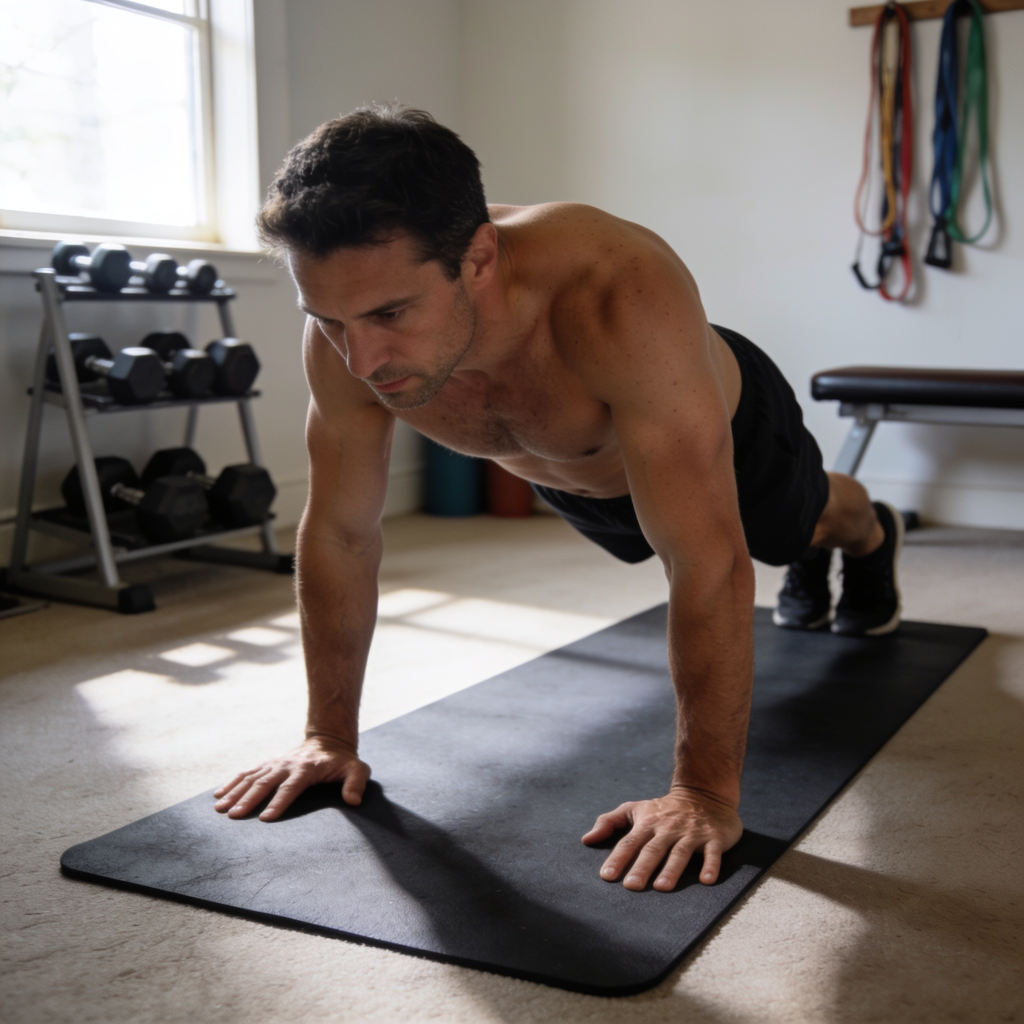
Push-ups are a classic bodyweight exercise that targets the chest, shoulders, triceps, and core. They are highly effective for building upper body strength and can be modified for beginners by performing them on the knees or against a wall. To perform a standard push-up, one should start in a plank position, lower the body until the chest nearly touches the ground, and then push back up to the starting position.
Proper form is crucial to prevent injury and maximize effectiveness. Beginners should ensure their hands are slightly wider than shoulder-width apart, keep the body in a straight line, and avoid letting the hips sag or rise excessively during the movement. Over time, as strength builds, variations such as incline push-ups or decline push-ups can be introduced to increase the challenge.
Squats
Squats are a fundamental lower-body exercise targeting the quadriceps, hamstrings, glutes, and core. They can be performed anywhere and are highly effective for building leg strength and improving mobility. To execute a squat, beginners should stand with feet shoulder-width apart, lower the body as if sitting back into a chair, and then return to standing position while keeping the chest up and knees aligned with the toes.
Form is vital for squats as well. Beginners should focus on keeping their weight in the heels and ensuring the knees do not extend past the toes. As strength and comfort increase, variations like sumo squats or jump squats can be added to diversify the workout and enhance muscle engagement.
Lunges
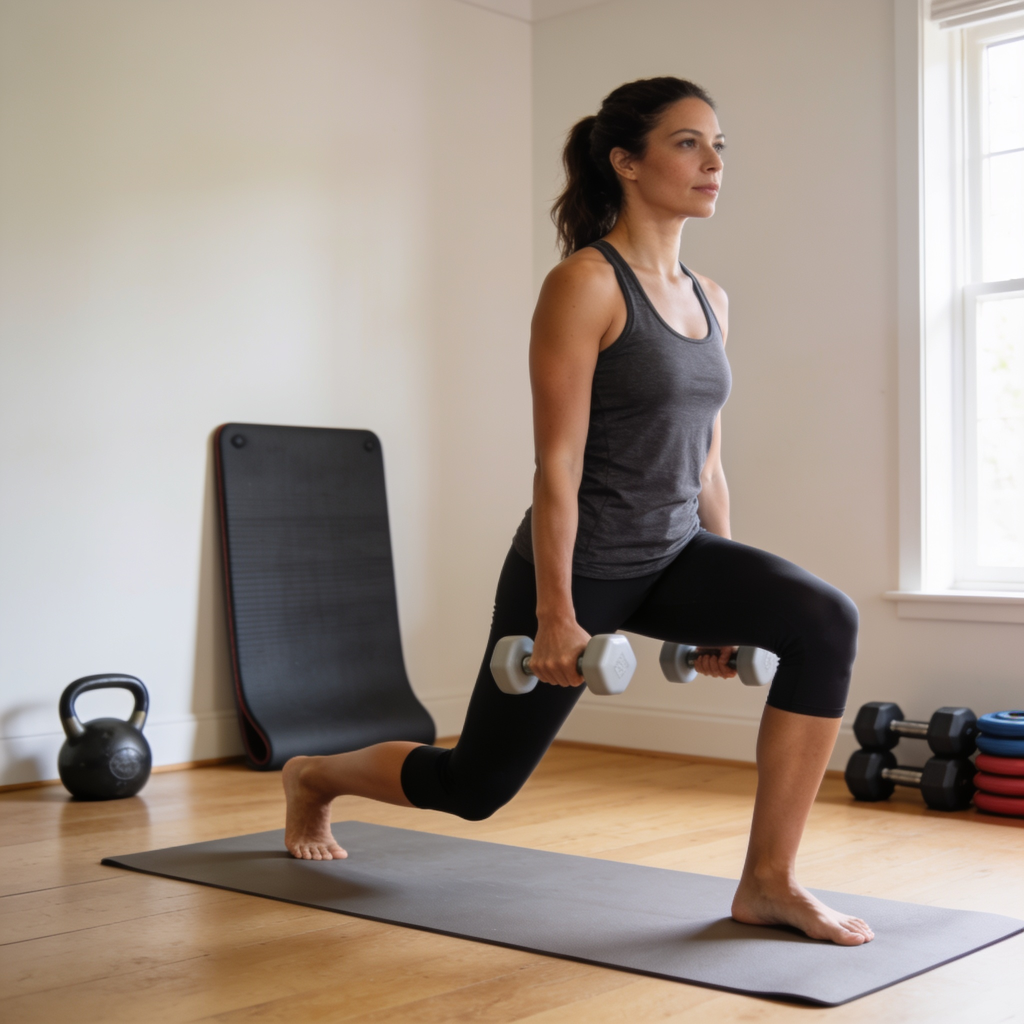
Lunges are excellent for developing strength, stability, and balance in the lower body. They engage multiple muscle groups, including the quadriceps, hamstrings, glutes, and calves. To perform a basic lunge, one should step forward with one leg, lower the hips until both knees are bent at about a 90-degree angle, and then push back to the starting position.
Beginners should keep their upper body straight, ensuring that the front knee does not extend beyond the toes as they lunge. Variations such as reverse lunges or lateral lunges can also be introduced to target different muscles and add variety to the workout routine.
Planks
Planks are a powerful core exercise that also engages the shoulders, back, and legs. They help improve overall stability and strength, making them essential for beginners. To perform a plank, one should start in a push-up position but maintain a straight line from head to heels, with the arms directly under the shoulders. The goal is to hold this position, engaging the core and avoiding sagging hips.
Form is vital in maintaining effectiveness and preventing strain. Beginners can start with modified planks on their knees and gradually progress to full planks as strength builds. Variations such as side planks or plank jacks can introduce new challenges and engage different muscle groups.
Burpees
Burpees are a full-body exercise that combines strength and cardio, making them a popular choice for beginners looking to improve overall fitness. A burpee involves a squat, push-up, and jump, all in one fluid motion. To perform a burpee, begin in a standing position, drop into a squat with hands on the ground, kick the feet back into a plank position, perform a push-up, return to the squat, and jump explosively to finish.
While burpees can be quite challenging, beginners may modify them by skipping the push-up or jumping phase. This exercise not only builds strength but also boosts cardiovascular endurance, making it an excellent addition to any bodyweight training routine.
Proper Form and Technique
Importance of Correct Form
Proper form is essential in all exercises to prevent injury and achieve the best results. Beginners may be eager to complete repetitions quickly, but neglecting form can lead to poor muscle engagement and increase the risk of injury. Taking the time to learn and practice the correct technique ensures that the exercises target the intended muscle groups effectively.
Not only does correct form help prevent injuries, but it also promotes better muscle development and strength gains. As form improves, individuals will find that they can progress to more challenging variations of each exercise, leading to continued growth and achievement in their fitness journey.
Common Form Tips for Each Exercise
For push-ups, focus on maintaining a neutral spine and keeping elbows tucked at around 45 degrees to the body. In squats, ensure that the knees track over the toes while keeping the chest lifted. When performing lunges, take a wide enough step to maintain balance and avoid forward knee movement. For planks, engage the core throughout and avoid lifting the hips too high or letting them sag. Lastly, in burpees, ensure a controlled descent and explosive jump while keeping the landing soft.
Practicing these tips will enhance overall performance and reduce the likelihood of injuries, ensuring a safer and more effective workout experience for beginners.
Structuring a Beginner Routine
Warm-Up Essentials
Before embarking on any workout routine, a proper warm-up is essential. A warm-up increases blood flow to the muscles, enhances flexibility, and prepares the body for more intense activities. For beginners, a typical warm-up might include dynamic stretches such as arm circles, leg swings, and torso twists, along with light cardio like jogging in place or jumping jacks for about five to ten minutes.
A well-structured warm-up not only helps to prevent injuries but also improves performance during the actual workout. It primes the muscles and nervous system, making them more responsive to exercise and enhancing the effectiveness of the bodyweight training session that follows.
Sample Weekly Schedule
| Day | Workout Focus |
|---|---|
| Monday | Upper Body (Push-Ups, Planks) |
| Tuesday | Lower Body (Squats, Lunges) |
| Wednesday | Cardio & Core (Burpees, Plank Variations) |
| Thursday | Rest or Light Activity |
| Friday | Full Body (Combination of All Exercises) |
| Saturday | Active Recovery (Walking, Yoga) |
| Sunday | Rest |
Following this sample weekly schedule allows beginners to focus on different muscle groups throughout the week while incorporating rest days essential for recovery. As they become more experienced, they may choose to adjust the routine to better fit their specific goals or preferences.
Sets, Reps, and Rest Basics
Understanding Sets and Repetitions
In bodyweight training, understanding sets and repetitions is key to structuring an effective workout. A repetition (or rep) refers to a single complete movement of an exercise, while a set is a group of consecutive repetitions performed. For beginners, it is advisable to start with 2-3 sets of 8-12 reps for each exercise, as this range typically promotes strength development and muscle endurance.
As individuals progress, they may increase the number of sets or reps, or explore more challenging exercises. Keeping track of progress can help maintain motivation and ensure continuous improvement in strength and fitness levels.
Optimal Rest Periods
Rest periods between sets are crucial for recovery and performance. Beginners should aim for 30 to 60 seconds of rest between sets, allowing the body adequate time to recover sufficiently to maintain proper form throughout the workout. Adequate rest also helps improve overall stamina and performance in subsequent sets.
As fitness levels increase, individuals may adjust their rest times based on the intensity of their workout and specific goals. Shorter rest periods can enhance endurance and cardiovascular fitness, while longer rest may be beneficial for strength-focused sessions.
How to Progress Safely
Incremental Increases in Intensity
Progressing safely in bodyweight training involves gradually increasing the intensity of exercises without compromising form. Beginners can achieve this progression by adding more repetitions, increasing the number of sets, or reducing rest times between sets. These incremental changes can elevate the workout’s difficulty and challenge the muscles to adapt and grow stronger.
Additionally, incorporating exercise variations can provide new challenges. For example, once a basic push-up is mastered, beginners can transition to incline or decline push-ups to engage different muscle groups and increase strength demands. This method fosters continuous improvement while keeping workouts engaging and less monotonous.
Exploring Advanced Variations
As strength and proficiency grow, beginners can explore advanced bodyweight exercise variations. Movements such as one-arm push-ups, pistol squats, and handstand push-ups pose greater challenges that test overall stability, strength, and balance. These exercises not only enhance muscle engagement but also offer a fun way to keep workouts fresh and exciting.
However, it is crucial to ensure that the foundation is solid before attempting advanced variations to prevent injuries. Beginners should only progress to these challenging movements when they feel confident in their ability to maintain proper form and control throughout each exercise.
Common Mistakes to Avoid
Neglecting Warm-Up and Cool Down
One of the most common mistakes beginners make is neglecting the warm-up and cool-down phases of their workout. Skipping a warm-up can lead to injuries and decreased performance, while failing to cool down may result in muscle soreness and stiffness. A comprehensive warm-up prepares the body for exercise, while a proper cool-down aids in recovery and helps return the heart rate to its resting state.
Beginners should always allocate time for both warm-up and cool-down routines, ensuring they incorporate stretches and gentle movements to promote overall mobility and flexibility. This practice not only minimizes injury risks but also enhances the benefits of bodyweight training.
Poor Form and Technique
Another significant mistake among beginners is prioritizing quantity over quality when it comes to form. Poor technique can lead to ineffective workouts and place unnecessary strain on the body, increasing the risk of injury. It is essential for beginners to focus on mastering each exercise’s proper form before increasing speed, intensity, or repetitions.
Taking the time to learn and practice each movement correctly will yield better results and contribute to long-term success in fitness. Seeking feedback from experienced individuals or using mirrors to check form can help ensure that exercises are performed correctly and effectively.
Conclusion
Bodyweight training offers a practical, cost-effective, and versatile approach to fitness, making it an excellent choice for beginners. Understanding the fundamentals of exercises, maintaining proper form, structuring routines effectively, and avoiding common mistakes are crucial for success in this training method. As individuals build strength and confidence, they can safely progress to more challenging movements and variations.
With commitment and consistency, bodyweight training can result in improved strength, flexibility, and overall well-being. By following the guidelines outlined in this article, beginners can embark on their fitness journey with confidence and enthusiasm, leading to lasting health benefits and an active lifestyle.
FAQs
What if I can’t do a full push-up yet?
It’s perfectly fine to start with modified push-ups, such as knee push-ups or wall push-ups. Focus on building strength gradually.
How often should I do bodyweight training?
Beginners can aim for 3–5 days a week, alternating muscle groups to allow recovery time.
Can I lose weight with bodyweight training?
Yes, bodyweight training can help with weight loss, especially when combined with a healthy diet and cardiovascular exercise.
Is it necessary to progress to advanced exercises?
Progressing to advanced variations is not required; what matters is finding a routine that suits your fitness level and goals.
How long will it take to see results?
Results vary by individual and depend on factors like consistency and nutrition, but noticeable improvements can typically be seen within a few weeks.